Dealing with a financial company can sometimes be frustrating. A payment may fail, a charge may appear incorrectly, an account may become inaccessible, or a service request may take longer than expected.
Financial customer support is designed to help customers understand and resolve these problems. Knowing how to report an issue, what information to provide, and when to escalate a complaint can make the process much easier.
This guide covers some of the most common financial customer-support issues and practical steps for resolving them.

What Is Financial Customer Support?
Financial customer support is the service provided by banks, finance companies, lenders, payment providers, insurance companies, and other financial businesses to assist their customers.
Support may be available through:
- Phone
- Mobile applications
- Online chat
- Websites
- Branches or offices
- Complaint and grievance departments
The exact support options vary between companies.
Common Financial Customer Support Issues
Financial customers commonly seek help with account access, payments, charges, transactions, loans, cards, and complaints.
Let’s look at some of the most common problems.
Account Access Problems
You may be unable to access your account because of:
- Forgotten login credentials
- Account lockout
- Mobile-number changes
- Security verification
- Technical problems
- Temporary account restrictions
How to Resolve It
Start by using the company’s official website or application.
If you cannot resolve the problem yourself, contact customer support through an official channel.
Be prepared to complete identity verification if required.
Never give your password, PIN, or OTP to someone claiming to help you access your account.
Failed or Pending Transactions
A payment may show as:
- Failed
- Pending
- Reversed
- Declined
- Completed but not received by the recipient
How to Resolve It
Check your account or payment history first.
Note the:
- Transaction date
- Amount
- Transaction ID
- Recipient or merchant
- Current transaction status
If the issue remains unresolved, contact the relevant financial institution or payment provider and provide the transaction reference number.
Unauthorized Transactions
An unfamiliar transaction can be a serious issue.
If you believe a transaction was not authorized by you:
- Contact the financial institution immediately.
- Report the transaction as unauthorized.
- Ask whether your card or account should be blocked.
- Secure compromised credentials.
- Keep the complaint reference number.
- Preserve relevant transaction records.
Do not delay reporting suspicious activity.
Incorrect Fees or Charges
You may sometimes notice a fee that you do not recognize or believe was applied incorrectly.
Examples include:
- Account fees
- Late-payment charges
- Service charges
- Transaction fees
- Processing fees
- Other account-related charges
How to Resolve It
Check the applicable fee schedule, account terms, or agreement.
Then contact customer support and ask for:
- An explanation of the charge
- The applicable terms
- A review of the transaction
- A correction or refund, if appropriate
Do not assume that every unfamiliar charge is an error. Ask the company to explain it first.
Problems With Loan Payments
Loan customers may experience issues involving:
- Payment failures
- Incorrect payment records
- Late-payment charges
- EMI-related questions
- Loan-account statements
- Early repayment requests
- Changes in payment instructions
How to Resolve It
Keep your loan account number and payment reference available.
Contact the lender through its official support channel and clearly explain the issue.
If you have already made a payment, keep the payment confirmation until the lender confirms that it has been properly credited.
Card-Related Problems
Debit and credit card customers may face problems such as:
- Card decline
- Lost card
- Stolen card
- Incorrect card charge
- Online payment failure
- Cash withdrawal problems
- Card not received
How to Resolve It
Contact the card issuer through its official customer-care or card-support channel.
If the card is lost, stolen, or potentially compromised, ask whether it should be blocked or replaced.
For an unauthorized card transaction, report it promptly and follow the issuer’s dispute procedure.
Problems With Refunds
Sometimes a merchant confirms a refund, but the amount does not appear in your account.
How to Resolve It
First, contact the merchant and ask for the refund reference or confirmation.
Then check with your bank or payment provider if the refund has not appeared within the expected processing period.
Provide:
- Original transaction details
- Refund date
- Refund amount
- Refund reference number
This information can help the financial institution trace the payment.
Account Statement Problems
You may notice:
- Missing transactions
- Incorrect transaction descriptions
- Incorrect balances
- Duplicate entries
- Unrecognized transactions
How to Resolve It
Compare your statement with your transaction records.
If something appears incorrect, contact the financial institution and provide the relevant transaction details.
Ask for a written explanation or correction where appropriate.
KYC or Verification Issues
Financial companies may request identity or other documents as part of their verification procedures.
Problems can occur when:
- Documents are incomplete
- Information does not match
- Verification fails
- Additional documents are requested
- Account information needs updating
How to Resolve It
Ask the company exactly which document or information is required.
Submit documents only through the company’s official and secure channel.
Avoid sending identity documents to unknown email addresses or individuals.
Poor Customer Service
Sometimes the problem is not the financial product itself but the support experience.
You may experience:
- Long waiting times
- Repeated transfers
- No clear answer
- Unresolved complaints
- Conflicting information
- Delayed responses
How to Resolve It
Remain professional and clearly explain the issue.
Ask for:
- Complaint registration
- A reference number
- The responsible department
- The expected resolution process
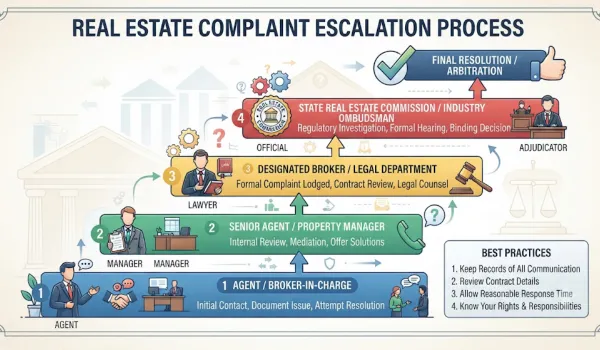
If the issue remains unresolved, use the company’s formal grievance-escalation procedure.
How to Make a Financial Complaint
A strong complaint should contain the important facts without unnecessary information.
Include:
- What happened
Explain the problem clearly. - When it happened
Provide the relevant date and time, if important. - What account or transaction is involved
Give the appropriate reference number. - What you have already done
Mention previous calls, emails, or complaints. - What you want the company to do
State the requested resolution clearly.
Keep Your Complaint Reference Number
Whenever you contact financial customer support, request a complaint or service reference number.
Keep it for future communication.
If you need to escalate the issue, the reference number can help the next department locate your previous complaint.
When Should You Escalate?
You may consider escalation when:
- The company has not responded within its stated timeframe
- The response does not address your complaint
- The problem remains unresolved
- You receive conflicting information
- You believe the company has not followed its complaint procedure
Start with the company’s internal escalation process before moving to an external authority, where applicable.
What If the Issue Involves Fraud?
Fraud-related problems require prompt action.
If you believe someone has accessed your account or made an unauthorized transaction:
Contact the financial institution immediately through an official channel.
You may also need to:
- Block the affected card
- Secure your account
- Change compromised credentials
- Preserve evidence
- Report the incident to the appropriate authority
Do not communicate further with suspected fraudsters.
Protect Your Financial Information
Customer support should never be an excuse to ignore basic security precautions.
Never share your:
- OTP
- PIN
- Password
- UPI PIN
- Card CVV
- Other confidential authentication credentials
If someone contacts you unexpectedly claiming to be customer support, verify their identity independently.
It is safer to end the interaction and contact the company using the number or support channel listed on its official website or application.
Common Mistakes to Avoid
Using Unofficial Contact Information
Always verify customer-support details through an official source.
Providing Too Much Information
Give the company what it needs to investigate the issue, but avoid unnecessary disclosure of sensitive information.
Not Keeping Records
Save emails, screenshots, transaction details, and complaint numbers.
Repeating the Same Complaint Without Escalation
If the issue is not being resolved, use the company’s formal escalation process.
Losing Your Complaint Reference Number
Keep the reference number until the matter is completely resolved.
Frequently Asked Questions
What are the most common financial customer-support issues?
Common issues include failed transactions, unauthorized payments, account-access problems, incorrect charges, card issues, loan-payment problems, refund delays, and unresolved complaints.
How can I contact financial customer support?
Depending on the company, you may be able to contact support by phone, email, mobile app, website, online chat, or branch.
What information should I provide to customer support?
Provide relevant account, transaction, date, amount, and reference information. Avoid sharing passwords, PINs, OTPs, and other confidential security credentials.
What should I do if customer support does not solve my problem?
Ask for a complaint reference number and follow the company’s formal grievance or escalation process.
How should I report an unauthorized transaction?
Contact the relevant financial institution immediately through an official channel, report the transaction as unauthorized, and follow its fraud or dispute procedure.
Final Takeaway
Financial customer-support problems can often be resolved more efficiently when you identify the issue clearly, use an official support channel, provide relevant information, and maintain proper records.
Whether you are dealing with a failed payment, incorrect charge, loan issue, account-access problem, refund delay, or unauthorized transaction, start by contacting the appropriate financial company.
If the first-level support does not resolve the matter, use the company’s formal complaint and escalation process. For regulated financial services, additional external complaint or dispute-resolution options may be available depending on your location and the type of service involved.
Most importantly, protect your financial information throughout the process and never share OTP, PIN, password, or other confidential security credentials with an unexpected caller or message sender.
This article is for general informational purposes only. Financial customer-support procedures, complaint processes, consumer protections, and escalation options vary by company, financial product, and jurisdiction.